Maqsood Ahmed, OBE
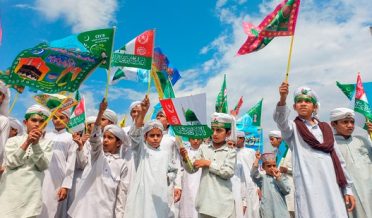
Every year during the month of Rabi’ al-Awwal, millions of people across the globe commemorate Eid Milad un Nabi—the birth of the Prophet Muhammad (peace be upon him). While marked by festive lights, gatherings, and spiritual songs (Naat) the core of this occasion is an invitation to reflect on a message that transcends time and geography. At the heart of this reflection sits a single, foundational Quranic verse from Surah Al-Anbiya:
“And We have not sent you, [O Muhammad], except as a mercy to the worlds.” (21:107)
To truly understand the Prophet’s legacy and its relevance today, we must examine what this verse conveys:
• the nature of this “mercy,”
• the vast scope of the “worlds,”
• the indicators that demonstrate this reality, and
• the obligations it places upon humanity.
What is Mercy (Rahmah)?
In contemporary usage, “mercy” often suggests leniency toward a wrongdoer or pity toward the suffering. However, in the Quranic context, the term Rahmah carries a far richer, active meaning. Derived from the same root as rahim (the womb), Rahmah denotes an all-encompassing, nurturing care, deep empathy, and an active commitment to bring relief, dignity, and flourishing to another.
The Prophet Muhammad (saw) was not merely a recipient of divine mercy; his entire life, character, and mission were crafted as an embodiment of it. His mercy was not passive sentiment. It manifested as radical forgiveness toward those who persecuted him, unyielding protection for the vulnerable, fair treatment of enemies, and systemic social reform that restored human dignity to a broken society.
What are the Worlds
(Al-Alameen)?
The Quran does not restrict this mercy to a single nation, tribe, or era, nor even exclusively to human beings. The phrase Al-Alameen is the plural of alam (world or domain of creation). It encompasses all existing realms:
• The World of the Self: Bringing spiritual clarity, peace of mind, and moral elevation to the individual.
• The World of Humanity: Establishing universal justice, racial equality, and social protection across all societies, regardless of creed or status.
• The World of the Living Creation: Extending compassion to animals, birds, and ecosystems.
• The World of the Unseen and the Cosmos: Encompassing the spiritual realities and the balance of the created universe under the sovereignty of the Creator.
By declaring him a mercy to Al-Alameen, the Divine message affirms that the guidance brought by the Prophet (SAW) is a universal gift designed to benefit every tier of existence.
The Indicators of Mercy for the Worlds
How does this divine mercy manifest in concrete terms? Throughout the Prophet’s life (Seerah), clear indicators demonstrate how this principle was operationalised in daily life and governance.
1. Social Justice and Universal Equality
Long before modern human rights charters, the Prophet (saw) abolished tribal elitism and racial supremacy. In his Farewell Sermon, he explicitly declared that no Arab has superiority over a non-Arab, nor a white person over a black person, except through piety and good action. He elevated the status of women, protected the rights of orphans, and guaranteed the welfare of the impoverished.
2. Mercy to the Vulnerable and the Opponent
When he returned victorious to Mecca—the very city that had tortured his followers and driven him out—he proclaimed a general amnesty, asking his former persecutors: “Go, for you are free.” His leadership was defined by gentleness rather than tyranny.
3. Practical Indicators in Daily Life
This mercy expresses itself through tangible, everyday actions across three core areas:
• Moral and Financial Integrity:
Practising absolute truthfulness, transparent and fair trade, and honesty in every interaction.
• Active Social Service: Dedicating efforts to feeding the hungry, protecting orphans, visiting the sick, and carrying out community care work.
• Environmental Stewardship: Engaging in conservation, preserving water, planting trees, and treating animals with kindness and protection.
The Obligations of the Worlds ON THE OTHER HAND
A gift of such magnitude carries a profound responsibility. The declaration that the Prophet (saw) is a mercy to the worlds is not merely a statement of praise to be celebrated; it is a covenant to be lived. The “worlds” hold key obligations in response to this divine grace:
• Recognition and Gratitude: Recognising the blessing of guidance and expressing gratitude through sincere devotion to the Creator (Allah) and blessings (salawat) upon the Messenger.
• Emulation (ITTEBA-Uswah Hasanah): The Quran designates the Prophet (saw) as the ultimate moral exemplar. The obligation of every individual is to study his character and mirror his integrity, patience, and humility in daily interactions.
• Active Stewardship (Khidma): If the Prophet (SAW) was sent as a mercy to all creation, those who follow him must become channels of that mercy. Believers are obliged to act as trustees (khalifah) on Earth—standing against injustice, relieving poverty, preserving the natural environment, and fostering peace within their communities.
A Living Legacy for Our Time
As we observe Eid Milad un Nabi, the message of Rahmatun lil-‘Alameen (Mercy to the Worlds) stands as an urgent call to action. In an era often marked by environmental crisis, social polarisation, and moral fatigue, the Prophet’s (SAW) legacy provides a path forward.
True commemoration goes beyond lights and gatherings; it is realised when we transform this mercy into an active duty. By treating neighbours with kindness, upholding absolute honesty in business, protecting the earth’s resources, and serving those in need, we honour the eternal light of the Prophet Muhammad (SAW) and fulfil our sacred trust as stewards of his legacy.